

We'll tell you if you don't need it
EPA guidance reserves duct cleaning for visible mold, vermin, or significant debris. If your camera inspection shows clean ducts, we say exactly that, hand over the photos, and you keep your money.
Dallas–Fort Worth · Licensed & insured
We start with a camera, not a quote. You see the inside of your own ductwork, you get a straight verdict against the three conditions EPA says warrant a cleaning, and if the system is clean we say so and hand you the photos.
Published from-prices · firm quote confirmed on camera before work starts
Photos before & after
of your actual ductwork
Written quote first
approved before we start
ACR standard
NADCA source removal
Replies in ~2 min
7am–midnight daily
Book it yourselffree basic inspection, or any service
Our own job file · not stock
Our own jobs, our own camera
Same boot, same wall, same afternoon. Pick whichever looks like the one in your hallway — it is the only way to judge work that happens inside a wall.
Flexible supply run, shot down the bore
The same ribbed run from the same position. The dust load lifts off the liner and the wire helix comes back into view — the debris streaked along the ribs is what a filter never reaches.
Every job leaves with a set like this attached to the invoice. If a company — ours included — cannot show you the inside of your ducts after charging to clean them, ask why.
How the work is done
Under negative pressure
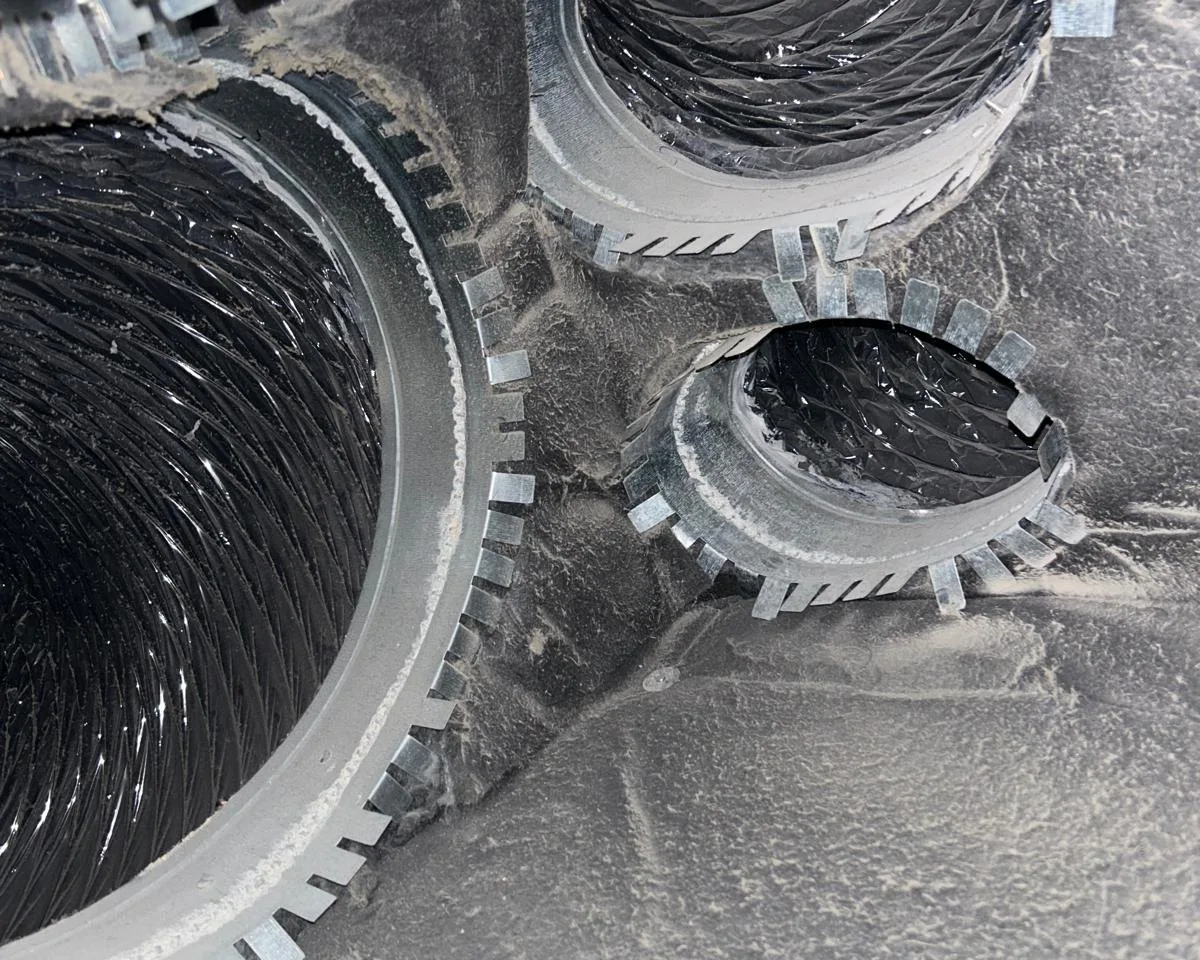
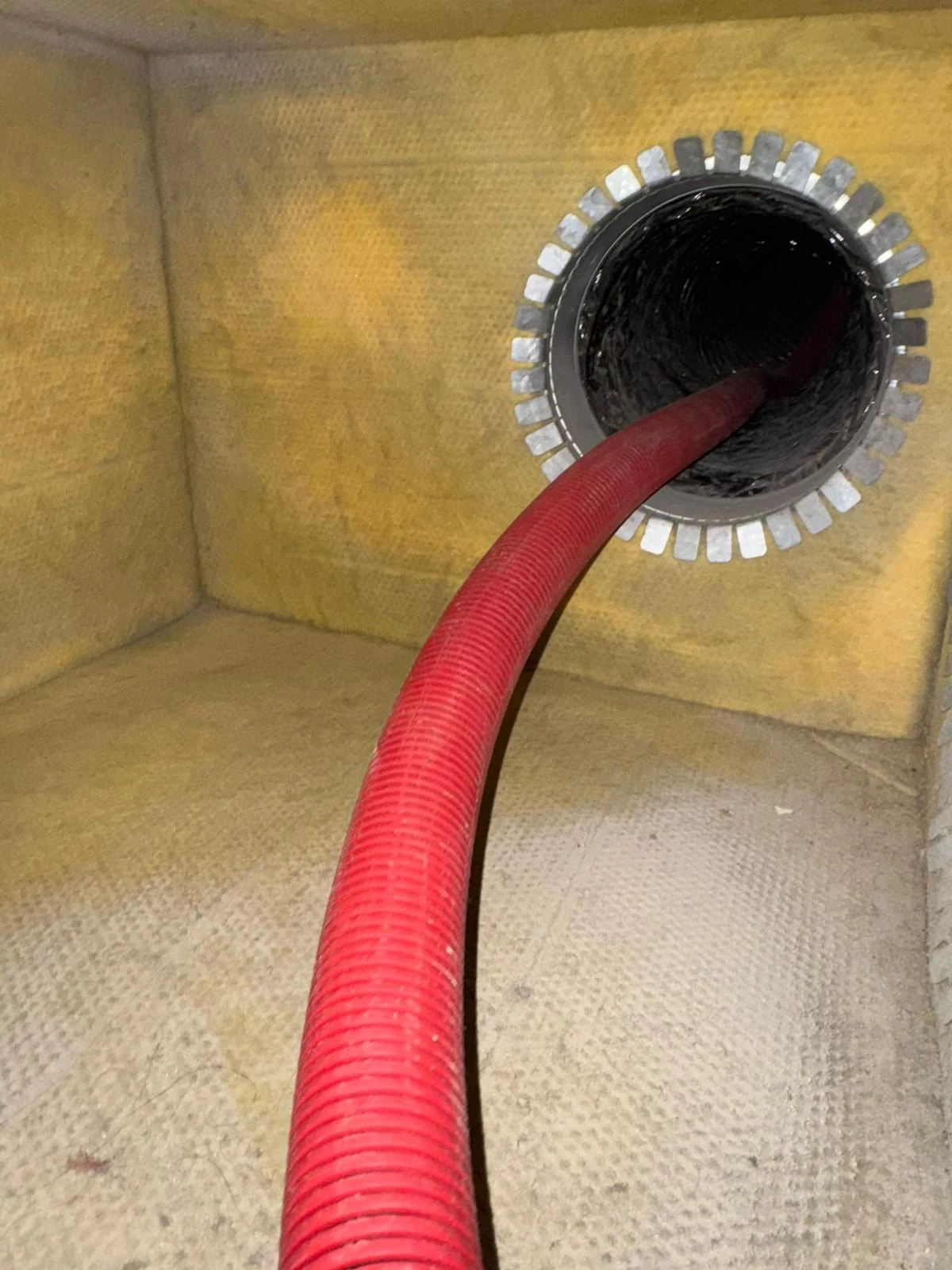
The collection hose at the plenum takeoff. With the system under vacuum, what comes loose can only travel one way.
The brush working the trunk
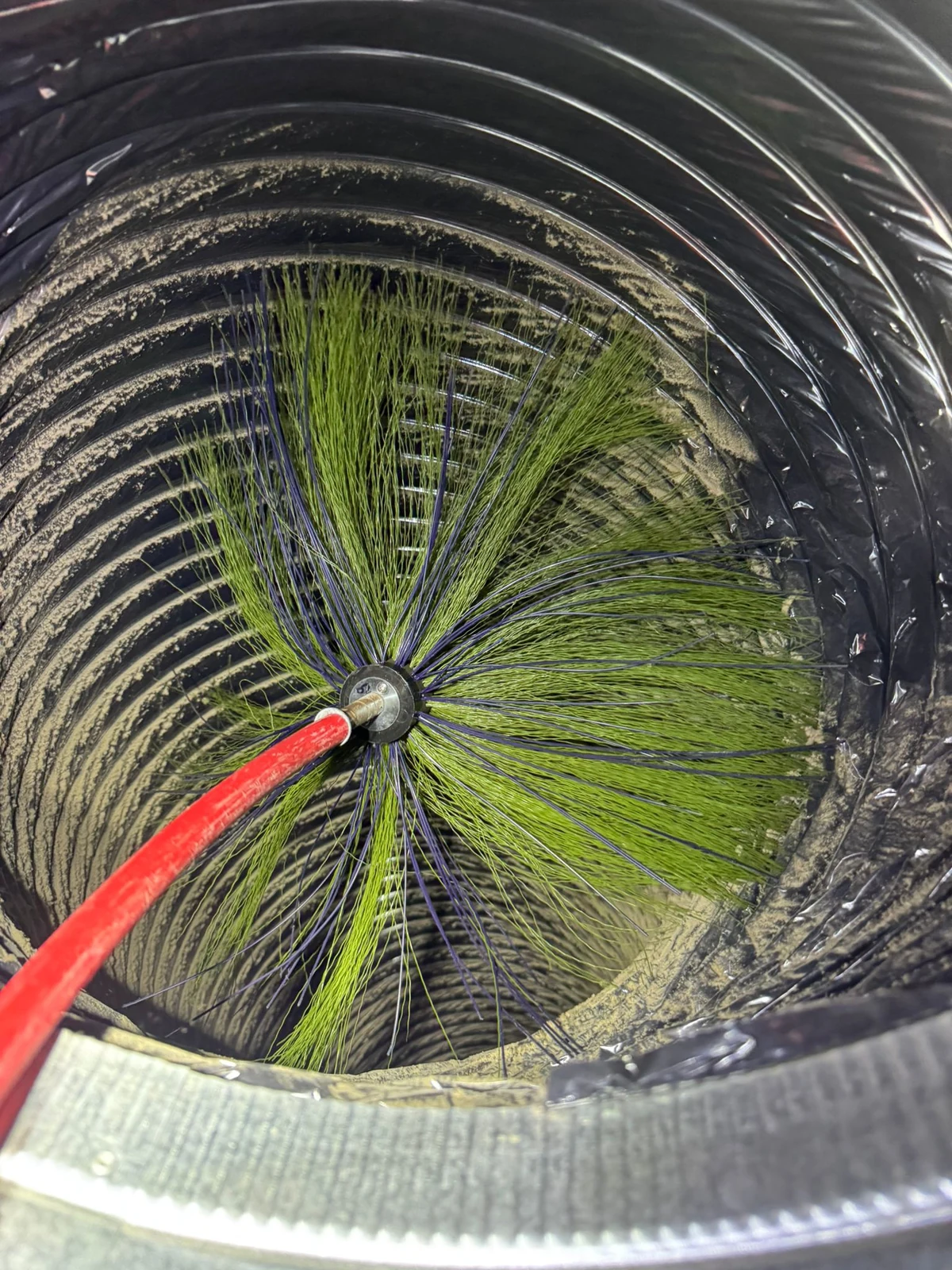
Agitation and the cleaned surface in the same frame — this is what source removal actually looks like mid-run.
Inside the run, not at the opening
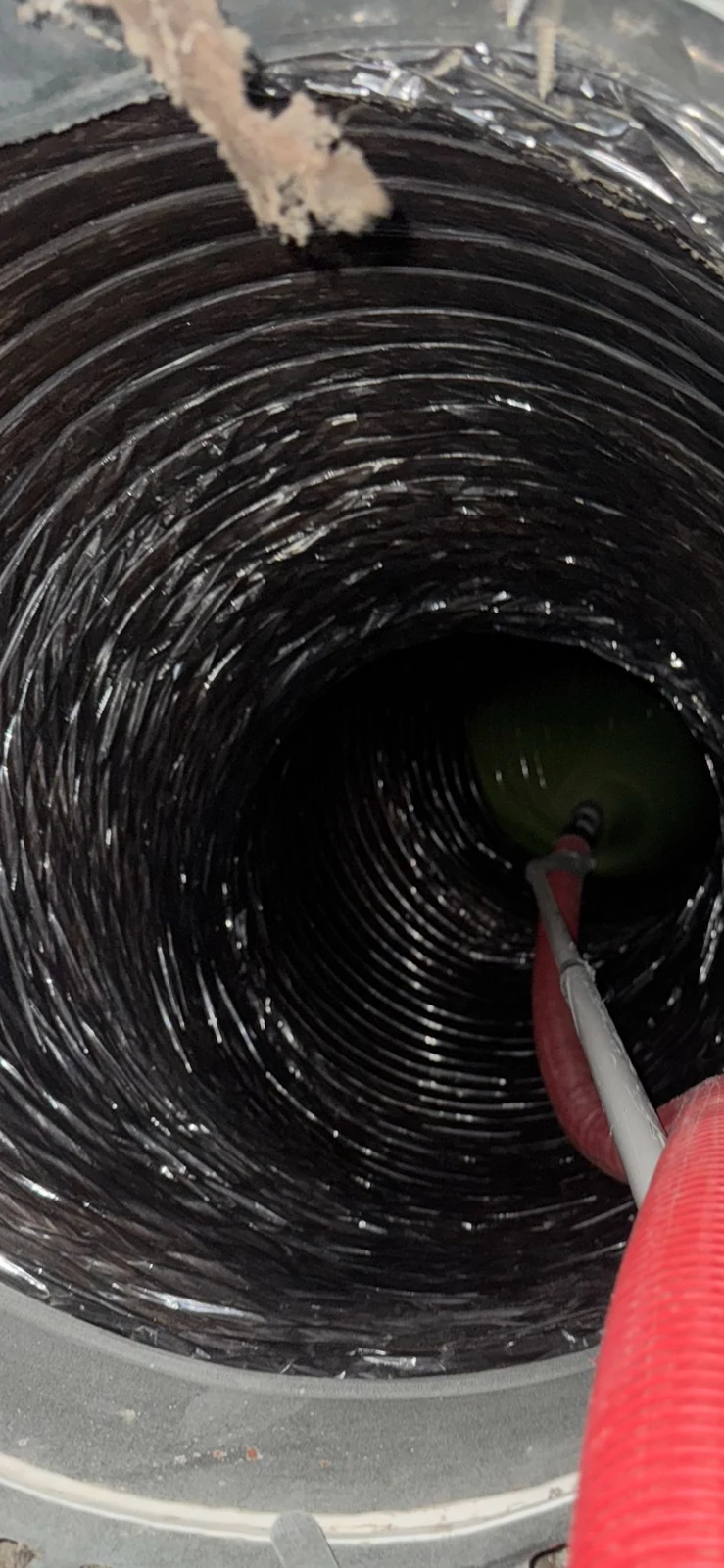
Brush and collection worked down the length of a supply, register back to plenum.
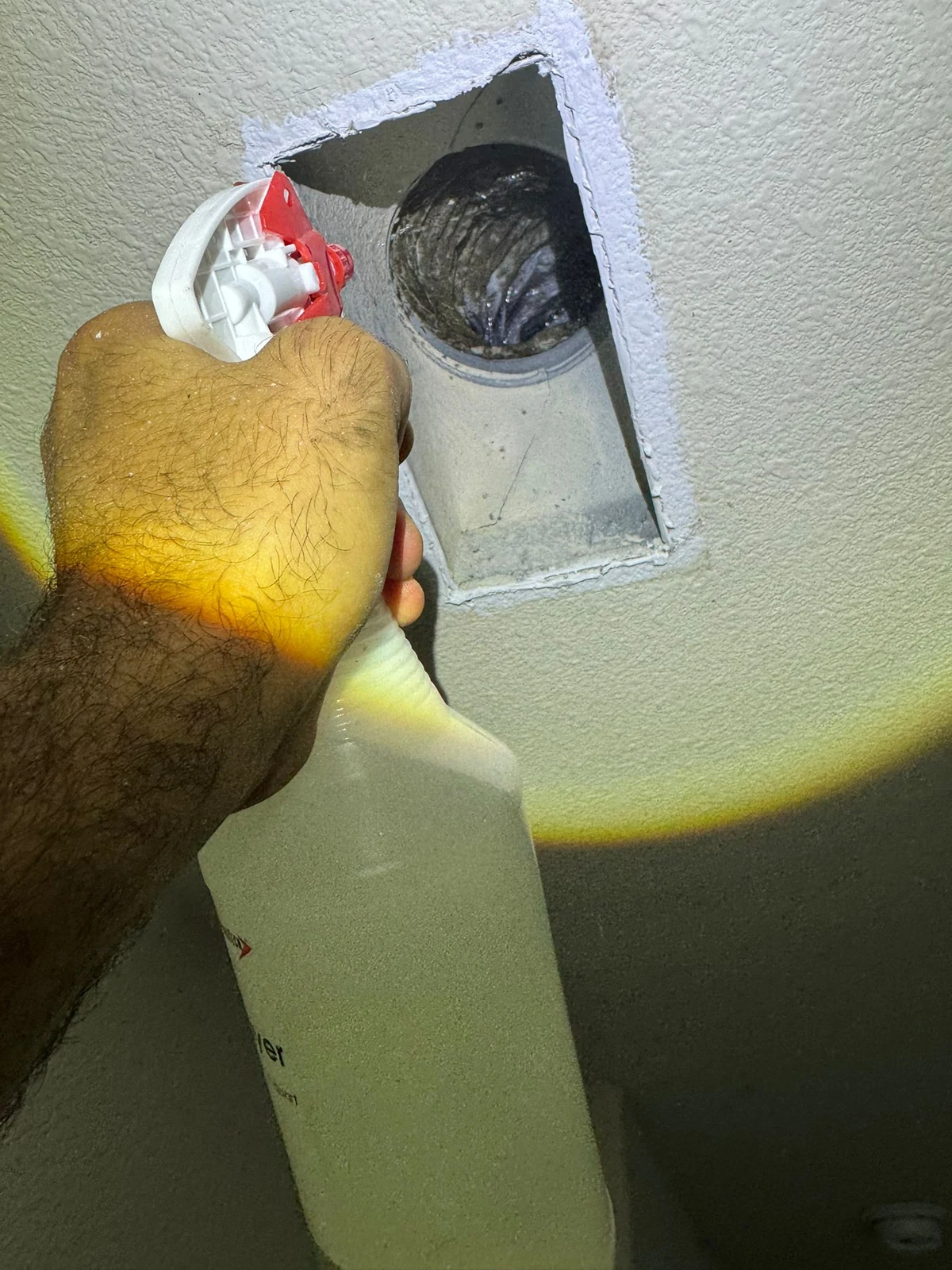
Treatment, only on indication
An EPA-registered, HVAC-labelled product on already-cleaned surfaces — and only where the footage showed a reason.
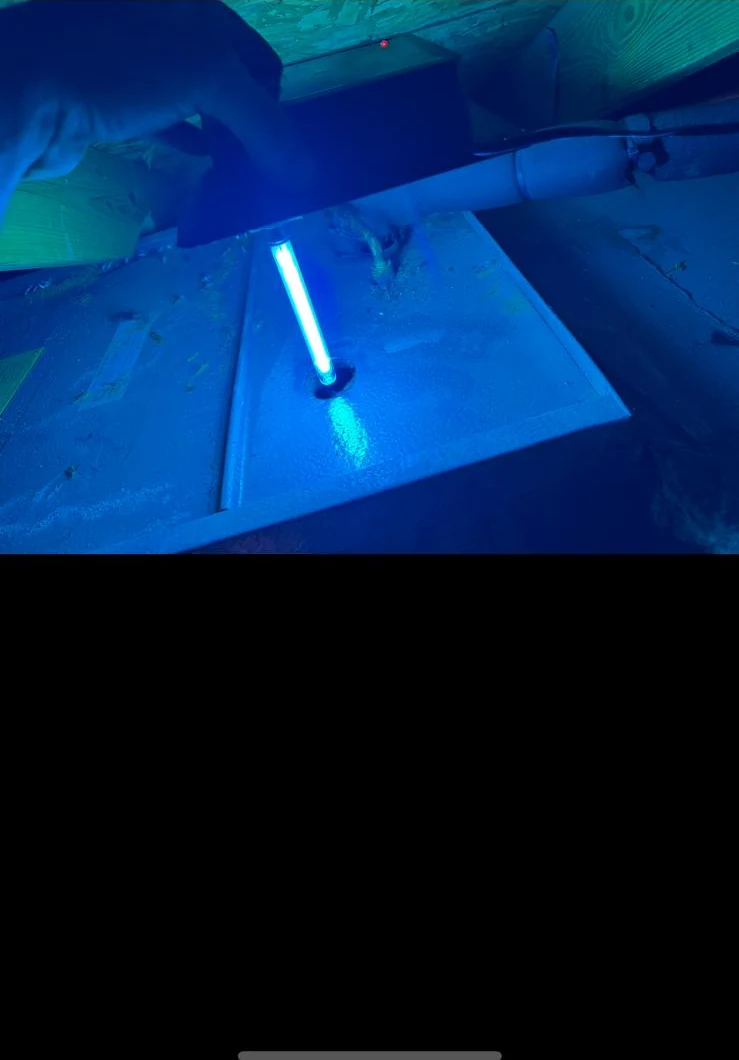
UV at the coil
A UV-C lamp aimed at the wet section of the evaporator. A coil-hygiene decision, not an air-purity claim.
What we find
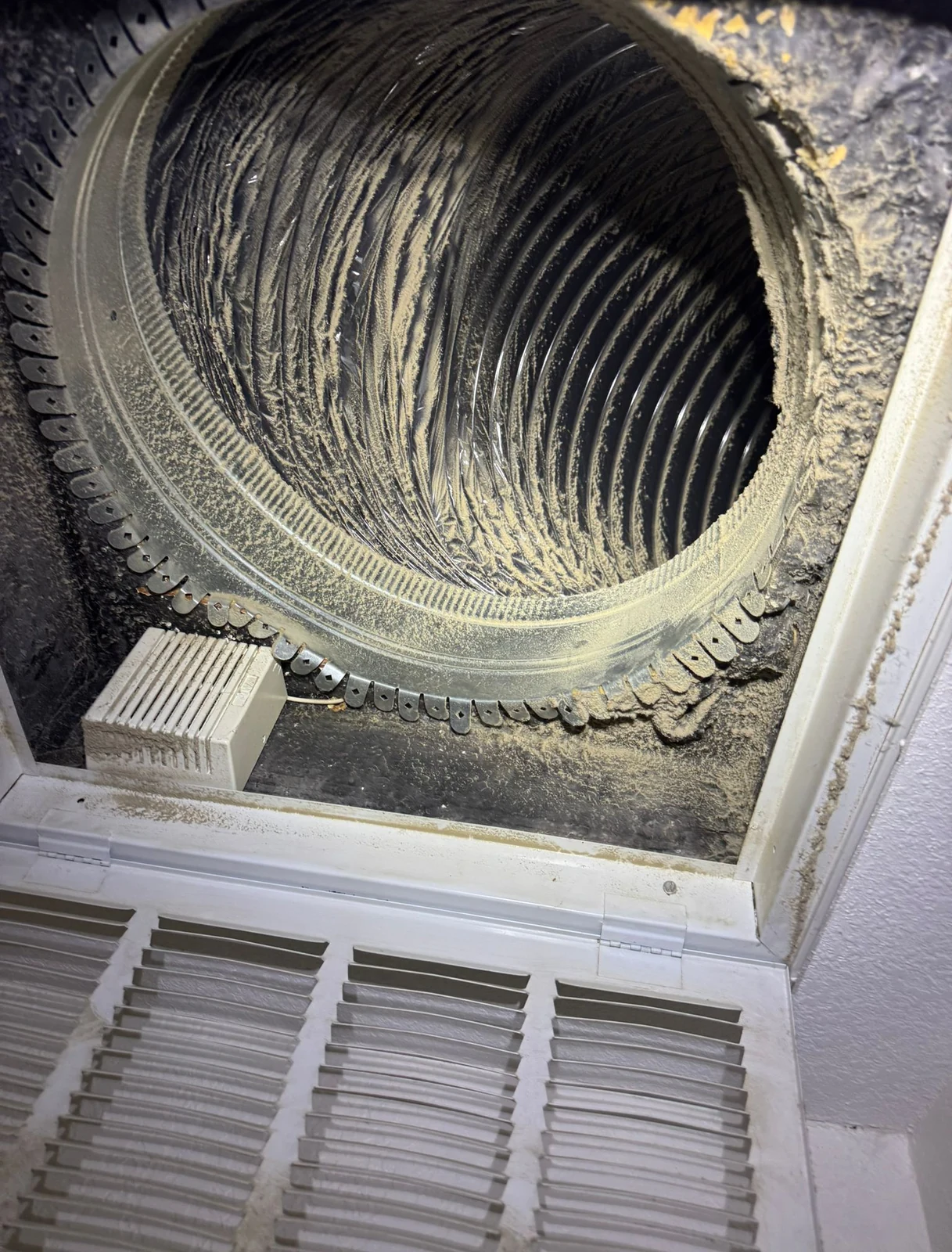
A trunk carrying its full load
The heaviest accumulation in our own files — the reservoir a filter never reaches, because it sits upstream of one.
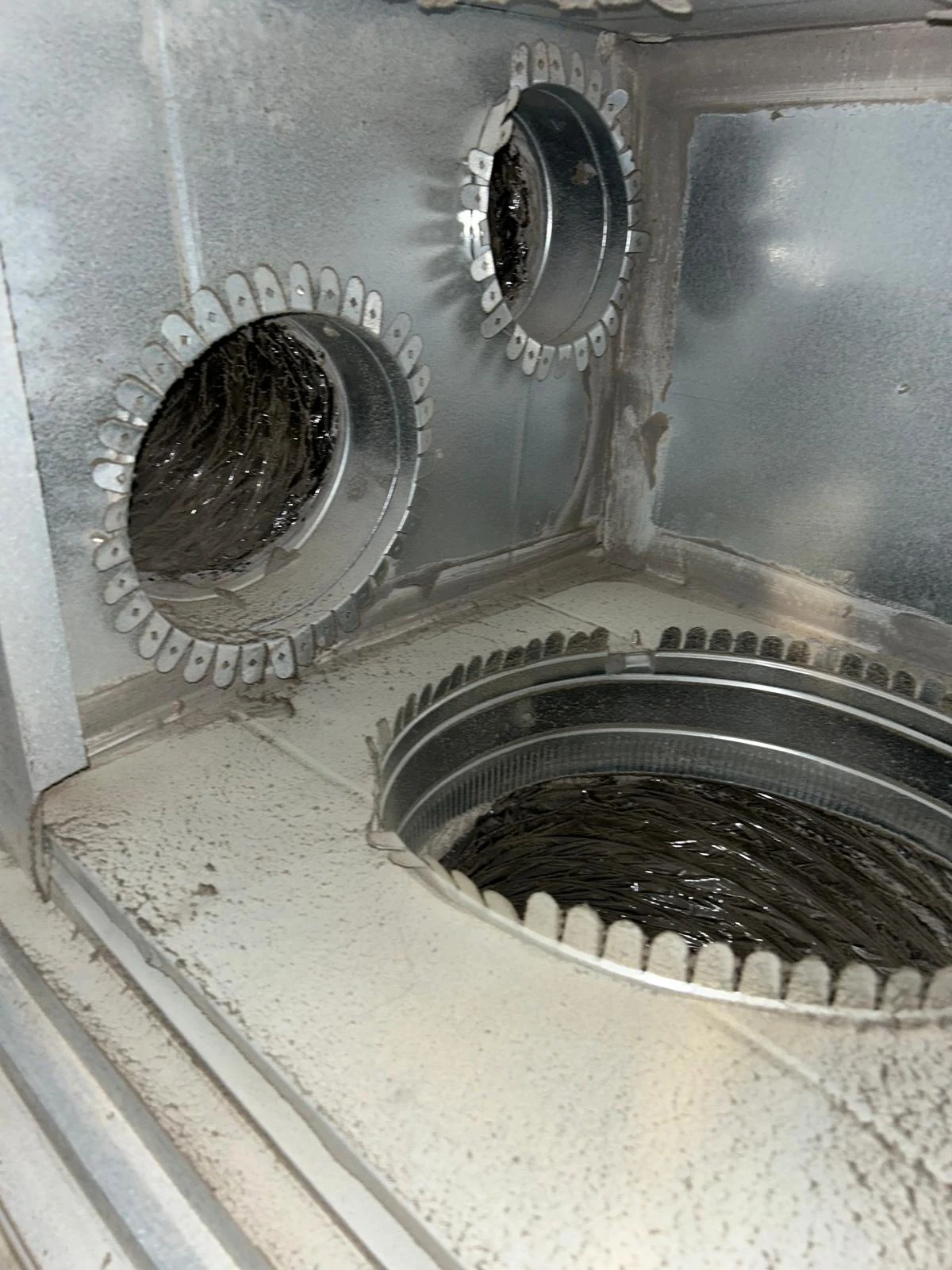
The plenum at the air handler
Where everything the system moves has to pass, and where a register-level clean never gets to.
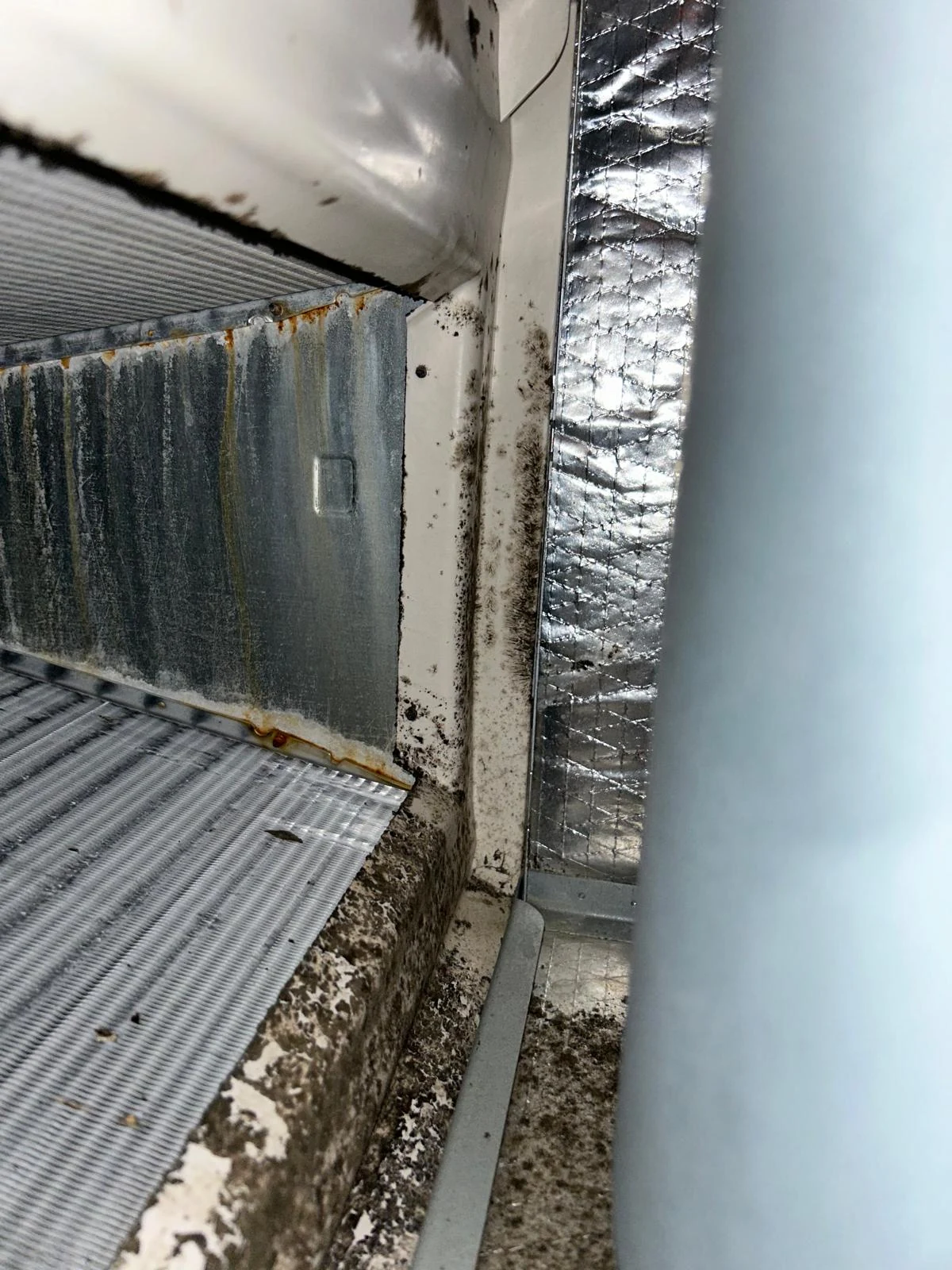
Microbial growth on a horizontal surface
Growth like this is a moisture problem before it is a cleaning problem. On hard metal it can be physically cleaned; on porous liner EPA is clear that it cannot, and replacement is the honest answer. Either way the water source has to be found, or it comes back.
What you are actually buying
Genuine source removal needs containment, a negative-air machine and agitation in every run. That labor has a floor. When a mailer advertises a whole house for less than the equipment costs to run, the money is coming from somewhere — usually an add-on pitch once the crew is inside your home. Here is the same job, line by line, so you can hold anyone’s quote against it.
System put under negative pressure
A high-volume collector holds the whole system under vacuum, so what comes loose leaves the house instead of relocating inside it.
Every supply and return run agitated
Brushes and air whips worked run by run, register to plenum — the mechanical half of source removal, and the half that takes the hours.
Both plenums cleaned at the air handler
Where the heaviest load actually sits. Skipping the plenums is how a system looks clean at the register and isn't.
Registers and grilles removed and washed
Taken off, washed, re-seated. Not wiped in place.
A fresh filter fitted before we leave
Included. A clean system behind a loaded filter is a wasted afternoon.
Camera photos before and after
Of your ductwork, delivered with the invoice. Duct work is invisible from the hallway — evidence is the only thing that closes that gap.
A vacuum run at the registers
The part the cheap ad does deliver. It takes minutes, it reaches the first few feet, and it is where that price ends.
Typical single-system home: 3–5 hours. Not ninety minutes — whole-home source removal physically cannot be done in ninety minutes.
Why us, specifically
EPA guidance reserves duct cleaning for visible mold, vermin, or significant debris. If your camera inspection shows clean ducts, we say exactly that, hand over the photos, and you keep your money.
You see inside your own ductwork — the dust load before we start and the clean surfaces after. No invisible work, no take-our-word-for-it, and a photo set delivered with every invoice.
Negative-pressure collection plus mechanical agitation in every run, following NADCA's Assessment, Cleaning & Restoration standard. Debris leaves the system entirely instead of being stirred around inside it.
One niche, practiced daily. Crews with fifteen-plus years of combined field experience in residential duct systems know where debris hides, how Texas attics punish flex duct, and what clean actually looks like.
Cedar in winter, oak and grass pollen in spring, dust through the long summer. We clean under full containment, so what's in the ducts leaves your home instead of recirculating through it.
Published from-prices, a firm quote confirmed on camera before work starts, and technicians paid to do the job well — not to sell you a bigger one. Add-ons are recommended only on real indication.
None of that is a slogan you have to take on trust — every one of them shows up as something you can hold: a photograph, a written line, or a price we published before you called.
What the standards actually say
Three bodies govern this work. One of them declines to recommend routine duct cleaning at all. We would rather you read that here, from us, than find it later and wonder what else we left out.
Indoor Air Quality — duct cleaning guidance
Duct cleaning has never been shown to actually prevent health problems, and EPA does not recommend cleaning on a schedule. It reserves the case for three conditions: visible mold growth, vermin, or debris heavy enough to be released into the home.
This is the standard we inspect against, and it is why a real share of our inspections end in “not yet”.
Read the sourceACR — Assessment, Cleaning & Restoration Standard
When a system does warrant cleaning, ACR specifies source removal: the system held under continuous negative pressure while every run is mechanically agitated, so debris is collected rather than redistributed.
Our procedures follow it, which is what makes the before-and-after photos meaningful rather than decorative.
Read the sourceMERV — filter efficiency rating method
MERV rates how much a filter captures — and, implicitly, how much resistance it adds. A residential blower has a finite pressure budget; a filter above what the system was designed for reduces airflow rather than improving air.
It is why we will talk you out of the highest-MERV filter on the shelf if your blower cannot carry it.
Read the sourceWe treat duct cleaning as hygiene, not medicine: it empties a reservoir of settled dust and dander. It does not cure allergies and we will never tell you it does.
Read the guidesEverything we do, and what it starts at
Ducts are the whole job here — no roofing arm, no plumbing van. Every price below is a published starting point, confirmed in writing after we look at your system on camera and before anyone touches it.
Start herefrom $99Camera Duct Inspection & Air-Quality AssessmentSee inside your ducts before you spend a dollar on cleaning.What it involves02from $349Full-System Air Duct CleaningWhole-home source-removal cleaning of every supply and return run.What it involves03from $1,800Duct Sealing (Aerosol)Sealed from inside the ducts, with a measured before-and-after leakage number.What it involvesSource-removal cleaning under negative pressure — whole systems or targeted runs — verified with before-and-after camera photos.
Camera assessments, odor investigations, and mold testing that produce evidence, honest verdicts, and firm quotes before any work is proposed.
Leakage testing, aerosol and mastic sealing, and repair of crushed, torn, or disconnected runs — with the before-and-after numbers in writing.
Sanitizing, UV lights, and filtration guidance — recommended only when the assessment shows a real indication, never as reflex add-ons.
Dust-outs and post-remodel cleanups that pull drywall fines and jobsite debris out of new or renovated duct systems.
Whole-home fragrance carried on the airflow — sold as scent and nothing else, never as air cleaning.
Scoped, documented duct cleaning for offices, clinics, retail, and multifamily buildings — scheduled after hours around your operations.
Every photograph here is ours — real ductwork in real DFW homes, shot on the job. Drag the slider: the same flexible run, before and after.
Source-removal duct cleaning, photographed on the job.
How a job actually goes
Nothing here commits you to the next thing. The most common good outcome is that step two ends the conversation.
Book it yourself in the form here, or call and a person picks up. Either way we ask what prompted this — a smell, a renovation, a listing requirement, dust you keep re-dusting — because the answer usually decides whether you need an inspection or a cleaning at all.
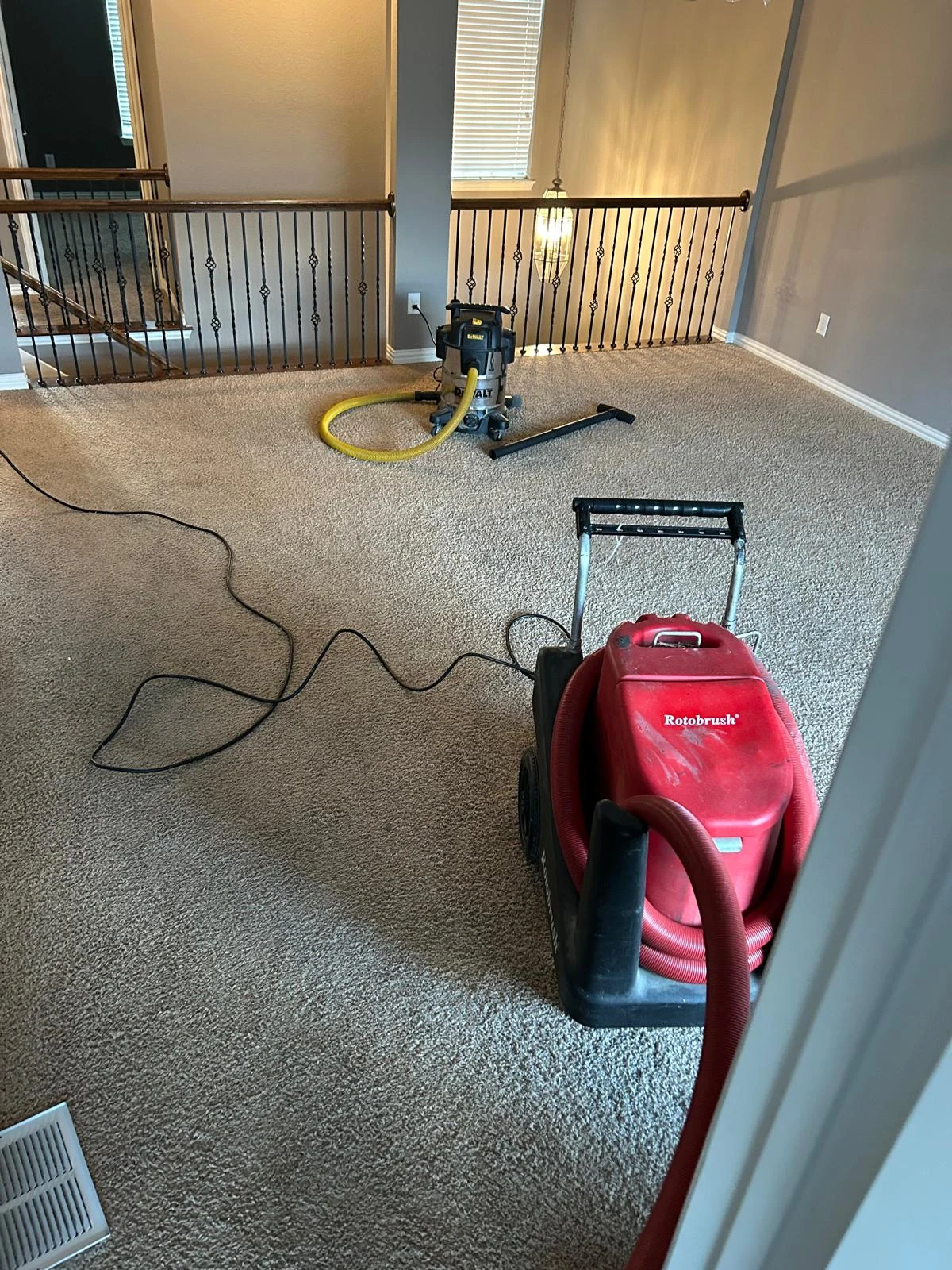
A technician runs a camera through the system and photographs it. You get a verdict against the three conditions that warrant a cleaning, with the footage, whether or not it goes your way.
Firm, itemised, and confirmed before anything is touched. It does not move mid-job. Add-ons appear only where the footage shows a reason — our technicians aren't paid on what they sell.
Containment down, system under negative pressure, every run agitated, registers washed, fresh filter in. You get after-photos of the same runs you saw before, delivered with the invoice.
Pick any window on any day except Saturday — we can almost always take it. You get a confirmation straight back, and we call you first if anything about the slot has to move.
Click a pin on the map or pick a city below. Every metro shows real coverage tier, neighborhoods we serve, and recent jobs completed.
Also serving across Texas
Every city we cover
Before you book
Answered the way we’d answer them on the phone — including the ones where the honest answer costs us the job.
Maybe not — and we'll be the ones to tell you. EPA guidance says duct cleaning is warranted in three situations: visible mold, vermin in the ducts, or significant dust and debris buildup. Not on a calendar, not automatically every few years. Our $99 camera inspection checks your system against those conditions and gives you a straight verdict with photos. A meaningful share of inspections end with 'not yet, re-check in a couple of years' — and that answer costs you $99, not $600.
Honestly: there is no good evidence that it does, and the EPA states plainly that duct cleaning has never been shown to prevent health problems. It genuinely helps when your system meets one of the EPA's three conditions — visible mold growth, vermin, or debris actually being released into your rooms — and a camera inspection tells you which. For a household with asthma or heavy seasonal allergies, the changes that reliably move indoor air are a filter matched to what your blower can pull, a return path that isn't starved, and sealing ducts that are pulling attic air into the house. We would rather point you at those than sell you a cleaning you don't need.
Only if something has actually loaded them, and the usual culprit is renovation. Drywall dust and jobsite debris land on the return side where a filter never reaches them, so a nursery remodel with the system running is a real case and the before-and-after footage shows it. If nothing has changed about the house, start with the $99 camera inspection — it often ends the conversation. And one hard rule regardless: no ozone-generating air cleaner near an infant. The EPA is clear those aren't effective at concentrations that are safe to breathe.
A full-system source-removal cleaning starts at $349, targeted supply-and-return work at $199, and a camera inspection at $99. Those are honest starting points, not bait: your exact quote is confirmed after we look at the system on camera and before any work begins, and it doesn't change mid-job. Add-ons like sanitizing ($149) or a UV light ($399) are offered only when the footage shows a real indication — our technicians don't earn commissions.
Three to five hours for a typical single-system home. The honest variables are the number of runs, attic access, duct type, and how much debris the system is carrying — a two-system two-story takes longer than a compact ranch. We'd rather quote you a real window than promise a ninety-minute miracle, because whole-home source removal physically cannot be done in ninety minutes. You'll get a specific time estimate with your quote, and the system is back on the moment we finish.
There's no honest fixed schedule, and we won't invent one. Ducts need cleaning when their condition says so — after a renovation, a pest issue, a moisture event, or gradual buildup that's now visible on camera. Some systems go a decade staying respectable; others load up in three years because of construction next door or a heavy-shedding pet. The economical habit is an inexpensive camera inspection every few years: it either buys you peace of mind or catches the problem while it's a targeted cleaning instead of a full one.
Last thing
A $99 camera inspection is the cheapest way to find out whether you need us at all — and a real share of them end with “not yet”. Either way you keep the footage.
Open Mon–Sun 7:00 AM – 12:00 AM · a person answers

